The real cost of Профессиональная автомойка для грузовиков и внедорожников: hidden expenses revealed
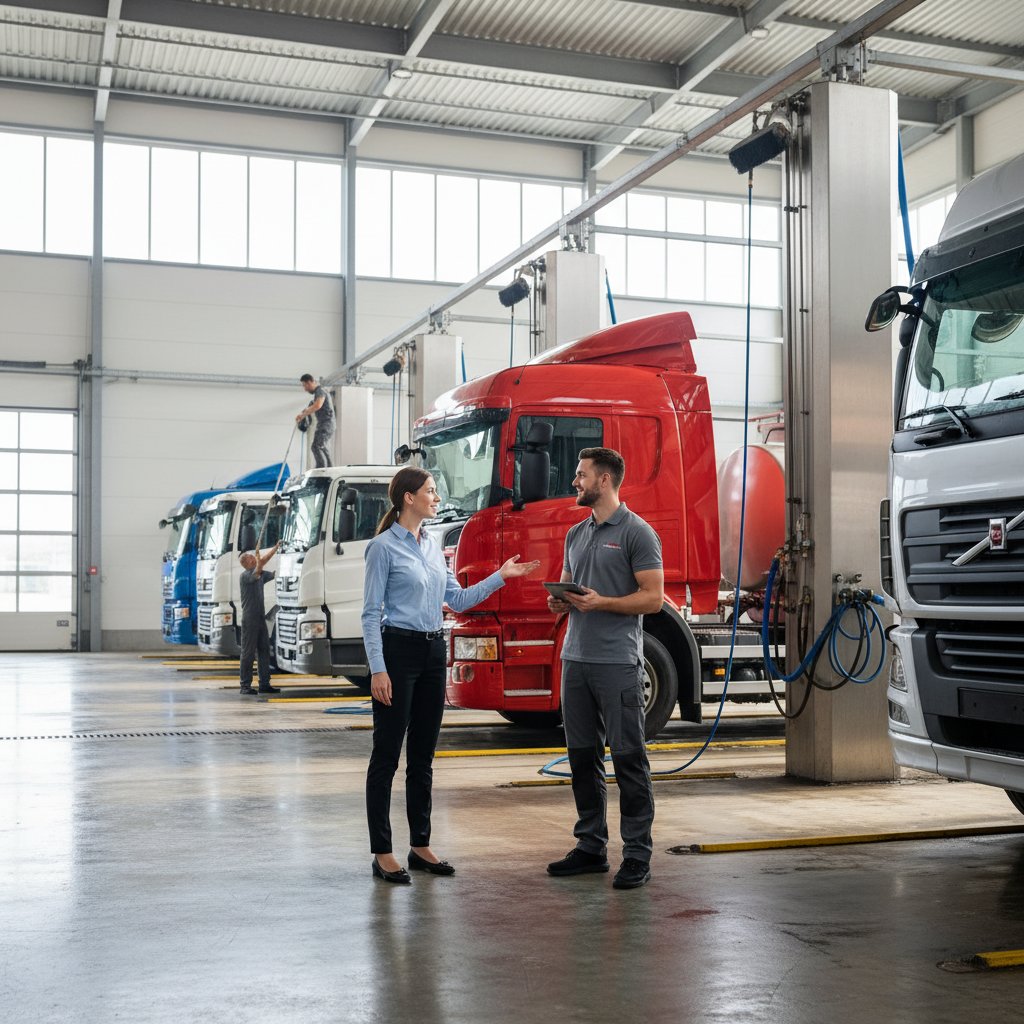
Last Tuesday, I watched a fleet manager nearly choke on his coffee when his accountant dropped the real numbers on the table. The professional truck and SUV wash operation they'd been running for eight months? Turns out it was bleeding $3,200 more per month than the spreadsheets showed.
Welcome to the world of commercial vehicle washing, where the price tag on the equipment is just the opening act.
Why Nobody Talks About the Real Numbers
Here's the thing about getting into the truck and SUV washing business: everyone sells you on the upfront costs. A decent automated bay runs $75,000 to $150,000. A touchless system for larger vehicles? Maybe $200,000 if you're going premium. You calculate your ROI based on $40-80 per truck wash, multiply by projected volume, and boom—you're printing money in 18 months.
Except you're not.
The equipment manufacturers aren't lying to you. They're just not telling you about the operational black holes that'll drain your margins faster than a pressure washer strips mud off a Kenworth.
The Water Bill Nobody Warned You About
A single wash for a full-size truck uses anywhere from 80 to 150 gallons of water. Sounds reasonable until you do the math on 25-30 vehicles per day. That's 3,000+ gallons daily, or roughly 90,000 gallons monthly.
In most metro areas, you're looking at $4-7 per 1,000 gallons for water, plus sewer charges that often run 150-200% of the water cost. One operator in Denver told me his combined water and sewer bill hit $1,850 monthly—nearly double what his consultant had projected.
Reclaim systems help, sure. They'll cut water consumption by 60-70%. But installing one costs $15,000-40,000, and the maintenance? That's another story we'll get to.
Chemical Costs That Creep Up Like Inflation
Your detergent supplier quotes you $180 for a 55-gallon drum. Great! At proper dilution ratios, that should handle 400-500 washes.
Three months in, you're going through drums twice as fast. Why? Because road grime on commercial trucks isn't the same as suburban soccer mom dirt on a Tahoe. Your staff started bumping up concentrations to get results. Nobody told you, but your per-wash chemical cost just jumped from $0.40 to $0.75.
Multiply that across your monthly volume. On 600 washes, that's an extra $210 monthly—$2,520 annually—on just one product. Now add pre-soak, tire cleaner, wax, and spot-free rinse additives.
The Specialty Product Trap
Here's where it gets sneaky. Diesel fuel residue, DEF overspray, hydraulic fluid, and industrial contaminants need specialized cleaners. Your basic wash package doesn't cut it. Suddenly you're stocking six different chemical products instead of two, and your inventory holding costs just tripled.
Labor: The Line Item That Lies
You budgeted for two attendants at $15/hour. Eight-hour shifts, six days a week. That's $14,400 monthly in wages.
But commercial vehicle washing is physically demanding. Turnover in this sector runs 60-80% annually. You're constantly training. New hires work slower, make mistakes, and use more product. One facility manager in Atlanta calculated that training costs and reduced efficiency during ramp-up periods added 18% to his actual labor costs.
Then there's overtime. When a fleet shows up at 4:45 PM with eight trucks that absolutely must be clean for morning DOT inspections, you're paying time-and-a-half.
Maintenance: The Silent Profit Killer
Pressure washers rated for commercial use need pump rebuilds every 1,000-1,500 hours. At $600-900 per rebuild, and running 10-12 hours daily, you're looking at quarterly maintenance events.
Brush systems? Those bristles wear down fast on heavy-duty vehicles. Figure $800-1,200 every 4-6 months for replacement.
One operator shared his first-year maintenance log with me: $11,400 in unplanned repairs and part replacements. His pre-launch budget had allocated $4,000.
The Stuff Nobody Mentions
Concrete pad repairs from constant water exposure and heavy vehicle traffic: $2,000-5,000 every two years. Environmental compliance inspections and permits: $800-2,400 annually depending on your municipality. Insurance premiums that spike after your first claim (and there will be claims): 15-30% increases aren't uncommon.
Oh, and that reclaim system we mentioned? The filters need replacing every 3-6 months at $300-600 a pop.
Key Takeaways
- Hidden costs add 35-50% to your operating expenses beyond equipment and basic supplies
- Water and sewer charges typically run $1,500-2,500 monthly for moderate-volume operations
- Actual chemical costs often run 40-60% higher than initial projections due to concentration adjustments
- Labor inefficiency and turnover adds 15-20% to base wage calculations
- Maintenance and repairs should be budgeted at 8-12% of equipment value annually, not the 3-5% vendors suggest
Making the Numbers Work Anyway
Despite all this, professional truck and SUV washing can absolutely be profitable. The operators who make it work are the ones who build their models on realistic numbers from day one. They factor in 45% overhead instead of 25%. They price services to reflect actual costs, not theoretical ones.
Most importantly, they talk to operators who've been in the trenches for three years or more—not just the sales rep with the glossy brochure.
That fleet manager who nearly choked on his coffee? He adjusted his pricing structure, renegotiated his chemical supply contracts, and installed a reclaim system. Six months later, his operation finally matched the projections. It just took honest numbers to get there.